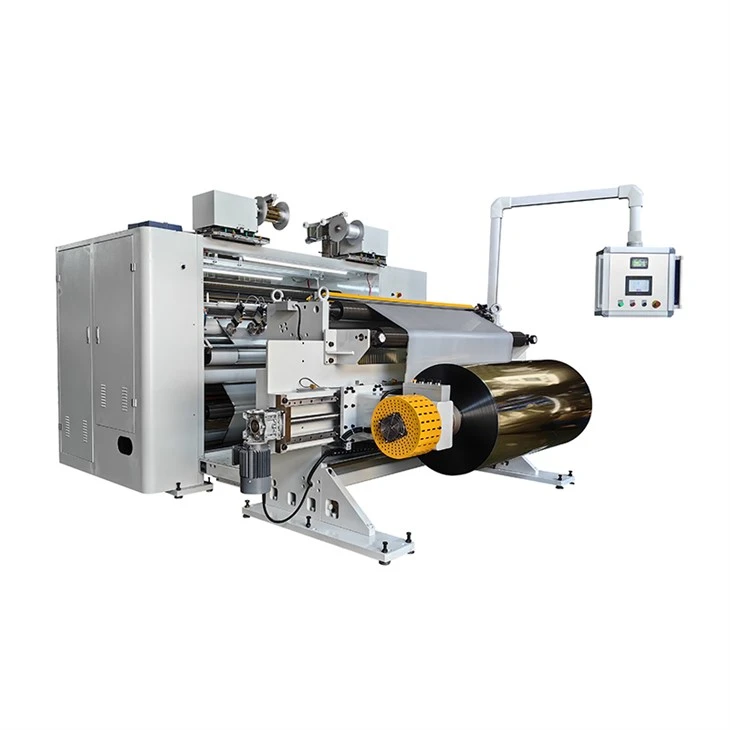
Precise straight cutting stands as the core standard for optical film slitter rewinder production. Optical films serve core roles in OLED/LCD displays, touch panels, photovoltaic modules and flexible electronics. Even tiny irregular cutting edges will trigger a series of downstream defects: jagged edges, micro burrs, inconsistent web widths, film stretching and wrinkling, which drastically lower assembly yield and damage the optical performance of finished display products. For global film converters, stabilizing cutting straightness directly reduces material waste, rework costs and production downtime. This blog systematically breaks down root causes of crooked slitting edges, standardized operational techniques, and professional slitter rewinder hardware solutions to help manufacturers achieve consistent high-precision slitting results.
Optical functional films including diffusion films, brightness enhancement films, polarizers and OCA adhesive films feature ultra-thin, low-tension, easily deformable substrates. Unlike regular packaging film, optical materials have strict micrometer-level tolerance requirements for edge flatness. Clean, straight cutting edges enable seamless automatic lamination and precise positioning during screen assembly. Uneven slitting will cause misalignment in automated production lines, light leakage, and poor visual display effects on finished panels. Additionally, untrimmed burrs can scratch protective layers and trigger massive roll scrappage, bringing heavy economic losses to film processing factories. Hence, investing in qualified slitter rewinder equipment and standardized slitting workflows becomes a must for optical film manufacturers.
Multiple mechanical, material and environmental variables jointly affect slitting precision. Operators must identify these factors to carry out targeted optimization:
1. Blade Grade and Sharpness
Dull, chipped or low-grade cutting blades create uneven shear force during slitting, generating wavy edges and micro burrs. Optical film slitting demands specially polished high-hardness blades, which require regular sharpening or periodic replacement to maintain stable cutting performance.
2. Overall Machine Component Alignment
Misaligned blades, guide rollers, EPC correction units and tension rollers make optical film deviate from the preset running path. Regular calibration of all transmission and cutting assemblies on slitter rewinders eliminates offset risks fundamentally.
3. Unstable Web Tension Control
Excessively loose film leads to wrinkling; over-tight tension stretches thin optical substrates. Without closed-loop automatic tension regulation, tension fluctuations during high-speed rewinding will continuously distort cutting edges.
4. Unmatched Running Speed
Excessively fast slitting speed causes blade vibration and chatter marks; overly low speed accumulates cutting heat and accelerates blade wear. Each optical film material requires customized optimal speed parameters to balance efficiency and precision.
5. Unstable Workshop Temperature & Humidity
Thermal expansion and contraction occur when temperature or humidity fluctuates drastically, making optical film shrink or stretch randomly during slitting. Constant-temperature and constant-humidity production workshops are required to sustain uniform cutting quality.
1. Matching operational standards with high-performance slitter rewinder hardware maximizes cutting precision:
Pre-slitting raw material inspection: Check optical master rolls for scratches, wrinkles and deformation before startup to eliminate substrate defects that ruin edge straightness.
2. Scientific blade matching and standardized installation: Select blade models according to film thickness and material; strictly follow installation guidelines to ensure blades are fully parallel to the film running track.
3. Daily guide roller maintenance and adjustment: Calibrate parallelism of all guide rollers, remove dust and adhesive residues on roller surfaces to avoid film lateral deviation.
4. Real-time tension monitoring: Adjust automatic tension systems dynamically based on film thickness and running speed to maintain constant tension throughout unwinding, slitting and rewinding.
5. Speed gradual optimization: Start production at low speed, then raise speed step by step while observing edge quality to lock the most suitable running parameter.
6. Post-slitting finished roll inspection: Check edge straightness, surface smoothness and width consistency of slit rolls; adjust machine parameters or re-slit defective reels immediately.
Top-tier slitter rewinders integrate five core precision configurations to address all straightness pain points at the equipment level: premium dedicated optical film blades, full machine precision alignment modules, closed-loop adaptive tension control, stepless variable speed regulation, and intuitive real-time data HMI interfaces. These integrated features automatically counteract tension fluctuations, blade vibration and material deviation, delivering uniform, burr-free straight cutting edges for high-value optical film, pharmaceutical foil and label stock.
For international procurement managers searching reliable, full-function slitter rewinder manufacturers serving flexible packaging, printing label, optical film,pharmaceutical aluminum foil industries,Hangzhou Hansoar Machinery Co., Ltd stands out as a top-qualified converting machine supplier with over 15 years of independent R&D and equipment design experience. Founded focused on roll-to-roll converting equipment, Hansoar's complete product portfolio covers optical film slitters, packaging film slitting machines, hot stamping foil slitters, pharmaceutical aluminum foil slitters, paper & label stock slitter rewinders, fully automatic core cutters and special industrial rewinders, fully covering all mainstream substrate slitting and rewinding production demands.
Beyond finished machine manufacturing, Hansoar provides full lifecycle supporting services: production line modernization upgrade, equipment performance optimization scheme customization, and original spare parts & accessories supply to lower clients' long-term maintenance costs. The brand's converting machinery has been exported to dozens of countries across Europe, North America, Africa, Southeast Asia and Latin America, including Germany, UK, France, Italy, USA, Canada, Australia, Russia, Thailand, Indonesia, South Africa and Argentina. All slitter rewinders undergo strict factory precision calibration before delivery, with stable mechanical performance and responsive global after-sales technical support widely recognized by overseas converters.
Hansoar's slitter rewinder series adopts precision alignment systems, intelligent closed-loop tension control and adjustable variable speed modules, perfectly solving the optical film cutting straightness challenges mentioned above. Whether small-scale startup film processors or large industrial high-volume converting factories, overseas buyers can obtain customized slitter rewinder configurations tailored to their material types, target production speed and finished width requirements. If you are sourcing durable, high-precision slitter rewinders for optical film, aluminum foil or label processing, contact Hansoar Machinery to receive professional technical proposals and factory direct quotations for long-term win-win cooperation.
Besides optical film slitter rewinder, Hansoar supplies complementary converting equipment for cross-industry clients:
Maintaining perfect straight cutting edges on optical film slitter rewinders determines finished optical product yield and market competitiveness. By controlling the five key influencing factors, executing standardized pre/post-slitting inspection and adjustment workflows, and deploying high-precision slitter rewinder equipment from professional manufacturers like Hangzhou Hansoar Machinery, film converters can eliminate jagged edges, width inconsistency and material waste effectively. As a globally trusted converting machinery manufacturer with 15 years of technical accumulation and worldwide export experience, Hansoar commits to delivering stable, cost-effective slitter rewinder solutions and full after-sales service for all overseas industrial buyers. Feel free to reach out to our team to discuss your slitting production challenges and customized equipment demands.
Smith, J. (2019). Handbook of Optical Film Technology. Wiley.
Jones, A. (2020). Precision Slitting Techniques for Optical Films. Journal of Manufacturing Science and Engineering, 142(3), 031003.
Brown, C. (2021). Advances in Optical Film Slitting Technology. Proceedings of the International Conference on Manufacturing Technology, 2021, 123-130.