

What is the role of the unwinding system in a Slitter Rewinder?
Jun 11, 2025
Hey there! As a supplier of Slitter Rewinders, I often get asked about the various components and their roles in these machines. One key part that plays a crucial role is the unwinding system. In this blog, I'll dive deep into what the unwinding system does in a Slitter Rewinder and why it's so important.
Let's start by understanding what a Slitter Rewinder is. It's a machine used in a variety of industries, like packaging, printing, and textiles. The main job of a Slitter Rewinder is to cut a large roll of material, like paper, film, or foil, into smaller, more manageable rolls. The process involves slitting the big roll into multiple narrow strips and then rewinding these strips onto separate cores. That's where the unwinding system comes in.
The unwinding system is responsible for feeding the large roll of material into the Slitter Rewinder. It's like the starting point of the whole operation. Without a proper unwinding system, the entire slitting and rewinding process would be a mess.
One of the primary functions of the unwinding system is to hold the large roll securely. It has to be able to support the weight of the roll, which can vary greatly depending on the material and the size of the roll. Whether it's a small, lightweight roll of paper or a heavy, thick roll of industrial film, the unwinding system needs to keep it in place. This is usually done using a shaft or a spindle that goes through the center of the roll. The shaft is then held in place by bearings or other mechanisms to ensure smooth rotation.
Another important role of the unwinding system is to control the tension of the material as it's being fed into the machine. Tension control is crucial because if the tension is too high, the material can break or get damaged. On the other hand, if the tension is too low, the material can wrinkle or bunch up, which can lead to uneven slitting and rewinding. The unwinding system uses various methods to control tension, such as brakes, clutches, or servo motors. These components work together to adjust the speed at which the roll rotates, ensuring that the material is fed into the machine at a consistent and appropriate tension.
The unwinding system also needs to be able to handle different types of materials. Different materials have different properties, such as thickness, flexibility, and stretchability. For example, a thin, delicate film will require a different unwinding setup than a thick, rigid cardboard. The unwinding system should be adjustable to accommodate these differences. Some machines have features like adjustable guides or rollers that can be customized to suit the specific material being processed.
In addition to holding the roll, controlling tension, and handling different materials, the unwinding system also plays a role in the overall efficiency of the Slitter Rewinder. A well-designed unwinding system can reduce downtime by allowing for quick and easy roll changes. When a roll is finished, the operator should be able to replace it with a new one as quickly as possible. This can be achieved through features like automatic roll loading or quick-release mechanisms.
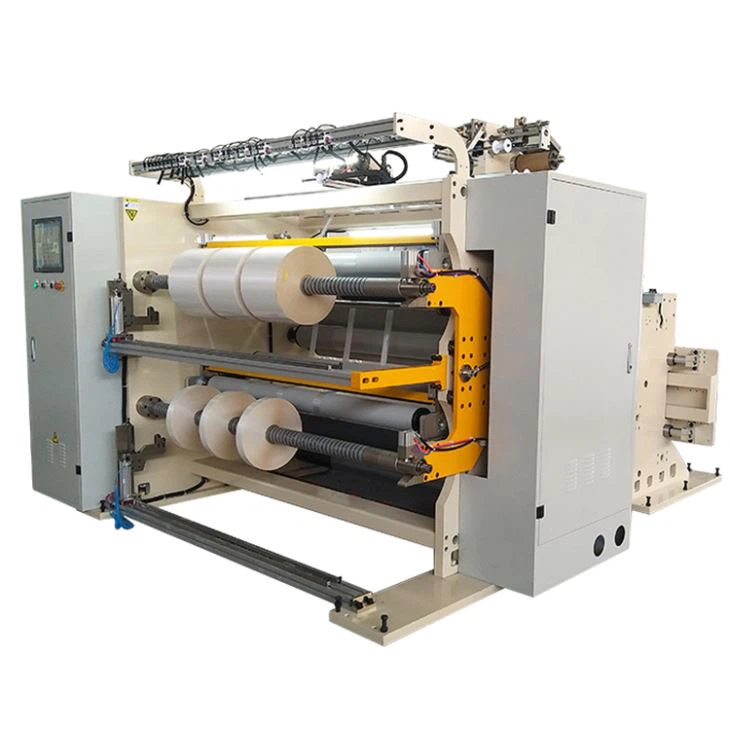
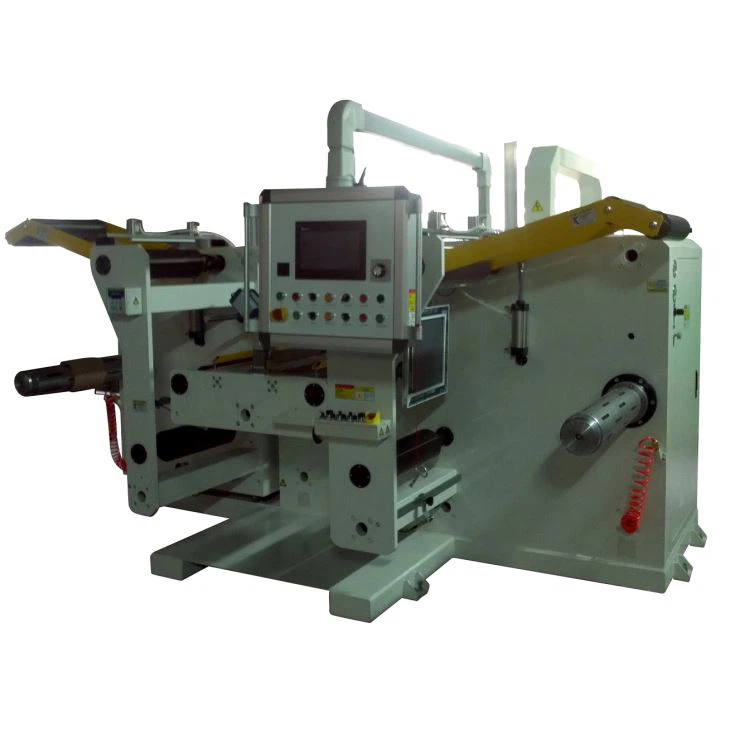
Now, let's talk about some of the different types of unwinding systems. There are two main types: single-shaft unwinding systems and dual-shaft unwinding systems.
A single-shaft unwinding system is the simplest and most common type. It has a single shaft that holds one roll of material. This type of system is suitable for small to medium-sized operations where the production volume is not too high. It's easy to operate and maintain, making it a popular choice for many businesses.
On the other hand, a dual-shaft unwinding system has two shafts, which means it can hold two rolls of material at the same time. This allows for continuous operation without having to stop the machine to change rolls. When one roll is finished, the machine can automatically switch to the other roll, reducing downtime and increasing productivity. Dual-shaft unwinding systems are often used in high-volume production environments where efficiency is key.
If you're in the market for a Slitter Rewinder, it's important to consider the quality and capabilities of the unwinding system. A good unwinding system can make a big difference in the performance and reliability of the machine. You can check out our Slitting Machine, Hot Stamping Foil Rewinding Machine, and Rewinder to see the different options we offer.
In conclusion, the unwinding system is a vital component of a Slitter Rewinder. It's responsible for holding the roll, controlling tension, handling different materials, and improving efficiency. Whether you're a small business looking for a simple solution or a large-scale manufacturer in need of high-volume production, choosing the right unwinding system is essential.
If you're interested in learning more about our Slitter Rewinders or have any questions about the unwinding system, feel free to reach out to us. We're always happy to help you find the perfect machine for your needs. Let's start a conversation about how we can improve your production process with our top-quality equipment.
References
- Smith, J. (2020). Handbook of Slitting and Rewinding Technology. Publisher X.
- Johnson, A. (2019). Advanced Materials Processing with Slitter Rewinders. Publisher Y.