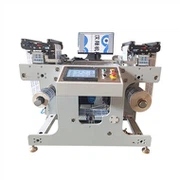
What Does A Core Cutter Machine Do?
Jun 27, 2024
The Core Cutter Machine: Functionality and Applications
A core cutter machine is an essential piece of equipment used in various industries for precise cutting and sampling of materials. These machines are designed to cut cylindrical cores from materials like paper, cardboard, plastics, foams, and even metals, depending on the specific model and configuration. The core cutter machine plays a crucial role in ensuring the efficiency and accuracy of production processes in industries such as manufacturing, packaging, printing, and textiles. This article provides a detailed exploration of the core cutter machine, its functionality, types, applications, advantages, and considerations for selecting the right machine for specific needs.
Functionality of Core Cutter Machines
Core cutter machines are engineered to perform precise cutting operations on tubular cores. The core cutting process involves several key steps:
Loading the Material: The material to be cut is loaded onto the machine. This can be a roll or a tube of material such as paper or plastic.
Positioning: The material is positioned accurately to ensure that the cuts are made at the desired locations. Precision is crucial to maintain the quality and consistency of the cuts.
Cutting Mechanism: The machine utilizes a cutting mechanism, which can be either rotary blades, knives, or other cutting tools, to make precise cuts through the material. The cutting mechanism can be manually operated or automated, depending on the machine's design.
Extraction: Once the cut is made, the core is extracted from the machine. This can be done manually or through automated systems that move the cores to the next stage of processing or packaging.
Types of Core Cutter Machines
Core cutter machines come in various types, each designed for specific materials and cutting requirements. The main types include:
Manual Core Cutter Machines: These are basic machines operated by hand. They are suitable for small-scale operations where precision cutting is required, but the volume of work is relatively low.
Semi-Automatic Core Cutter Machines: These machines offer a balance between manual and automatic operation. They require some level of manual input but automate key processes to enhance efficiency and accuracy.
Fully Automatic Core Cutter Machines: These are advanced machines designed for high-volume operations. They automate the entire cutting process, from loading the material to extracting the cut cores. These machines are highly efficient and offer precise cuts with minimal human intervention.
Rotary Core Cutter Machines: These machines use rotary blades to cut cores. They are ideal for materials that require smooth and precise cuts, such as paper and plastic films.
Guillotine Core Cutter Machines: These machines use a guillotine-like mechanism to cut through materials. They are suitable for thicker and more rigid materials like cardboard and some plastics.
Applications of Core Cutter Machines
Core cutter machines are widely used across various industries due to their versatility and precision. Some key applications include:
Manufacturing: In manufacturing, core cutter machines are used to cut cores from raw materials like plastic and metal tubes. These cores are then used in various production processes.
Packaging: The packaging industry relies on core cutter machines to produce precise cores for packaging materials like paper and cardboard tubes. These cores are essential for creating rolls of packaging materials.
Printing: In the printing industry, core cutter machines are used to cut cores from rolls of printing paper and film. This ensures that the paper and film can be easily loaded onto printing machines.
Textiles: The textile industry uses core cutter machines to cut cores from fabric rolls. These cores are then used in various textile production processes.
Construction: In construction, core cutter machines are used to cut cores from materials like foam and insulation. These cores are essential for creating insulation and other construction materials.
Advantages of Core Cutter Machines
Core cutter machines offer several advantages, making them indispensable in various industries:
Precision: Core cutter machines provide precise cuts, ensuring that the cores are of consistent size and quality. This is crucial for maintaining the quality of the final product.
Efficiency: These machines enhance the efficiency of production processes by automating the cutting process. This reduces the time and effort required to produce cores, increasing overall productivity.
Versatility: Core cutter machines can cut a wide range of materials, from paper and cardboard to plastics and metals. This makes them suitable for use in various industries.
Customization: Many core cutter machines offer customizable settings, allowing users to adjust the cutting parameters to meet specific requirements. This flexibility is essential for producing high-quality cores.
Safety: Modern core cutter machines are designed with safety features to protect operators from accidents. This ensures a safe working environment and reduces the risk of injuries.
Considerations for Selecting a Core Cutter Machine
When selecting a core cutter machine, it is important to consider several factors to ensure that the machine meets specific needs:
Material Type: Consider the type of material that needs to be cut. Different machines are designed to handle different materials, so it is essential to choose a machine that is compatible with the material.
Volume of Work: Consider the volume of work that needs to be done. For high-volume operations, a fully automatic core cutter machine may be the best choice, while a manual or semi-automatic machine may be suitable for smaller operations.
Precision Requirements: Consider the level of precision required for the cuts. For applications where precision is crucial, choose a machine that offers high accuracy and customizable settings.
Budget: Consider the budget for purchasing the machine. While fully automatic machines offer high efficiency, they can be more expensive. It is important to balance the cost with the desired features and capabilities.
Maintenance and Support: Consider the availability of maintenance and support services for the machine. Choose a machine from a reputable manufacturer that offers reliable customer support and maintenance services.