

In the realm of narrow web processing, the slitting and rewinding operations stand as critical stages that can significantly impact the quality and efficiency of the final product. As a leading supplier of Narrow Web Slitter Rewinders, I've witnessed firsthand the diverse requirements and challenges that our clients face. One of the most frequently asked questions is about the accuracy of slitting and rewinding in these machines. In this blog, we'll delve into the factors that influence this accuracy and explore how our solutions ensure precision in every operation.
Understanding the Basics of Slitting and Rewinding
Before we discuss accuracy, it's essential to understand what slitting and rewinding entail. Slitting is the process of cutting a wide web of material into multiple narrower strips, while rewinding involves winding these strips onto individual cores. These operations are commonly used in industries such as label manufacturing, packaging, and printing, where precise width and tension control are crucial.
The accuracy of slitting and rewinding is measured in terms of width tolerance, edge quality, and tension consistency. A high - accuracy machine can produce strips with minimal width variation, clean edges, and uniform tension throughout the rewound roll.
Factors Affecting Slitting and Rewinding Accuracy
1. Machine Design and Build Quality
The design of a narrow web slitter rewinder plays a fundamental role in its accuracy. A well - designed machine should have a rigid frame to minimize vibrations during operation. Vibrations can cause the cutting blades to deviate from their intended path, resulting in uneven slitting and poor edge quality.
Our slitter rewinders are engineered with a robust frame structure that provides excellent stability. The use of high - quality materials and precision manufacturing techniques ensures that the machine can maintain its accuracy even under high - speed operation. For example, the bearings used in our machines are carefully selected to reduce friction and ensure smooth rotation, which is essential for consistent tension control.
2. Cutting Blade Technology
The cutting blade is the heart of the slitting process. Different types of blades are available, each with its own advantages and limitations. For instance, rotary shear blades are suitable for high - speed slitting of flexible materials, while razor blades are often used for precise cutting of thin materials.
We offer a variety of cutting blade options to meet the specific needs of our clients. Our blades are made from high - grade materials and are precisely ground to ensure sharpness and durability. Regular blade maintenance and replacement are also crucial for maintaining accuracy. We provide detailed guidelines on blade care to our customers, ensuring that their machines continue to perform at their best.
3. Web Guiding Systems
A reliable web guiding system is essential for accurate slitting and rewinding. This system ensures that the web material is properly aligned during the process, preventing it from drifting off - center. There are several types of web guiding systems, including edge - guided, center - guided, and line - guided systems.
Our slitter rewinders are equipped with advanced web guiding systems that use sensors to detect the position of the web and adjust the guiding mechanism accordingly. This real - time feedback ensures that the web remains in the correct position throughout the slitting and rewinding process, resulting in accurate and consistent strips.
4. Tension Control
Tension control is another critical factor in achieving accurate slitting and rewinding. Inconsistent tension can lead to wrinkling, telescoping, and uneven winding of the strips. A good tension control system should be able to maintain a constant tension regardless of the web speed, material thickness, or roll diameter.
We incorporate state - of - the - art tension control systems in our machines. These systems use load cells and servo motors to monitor and adjust the tension in real - time. By precisely controlling the tension, we can ensure that the strips are wound tightly and evenly, with minimal variation in roll hardness.

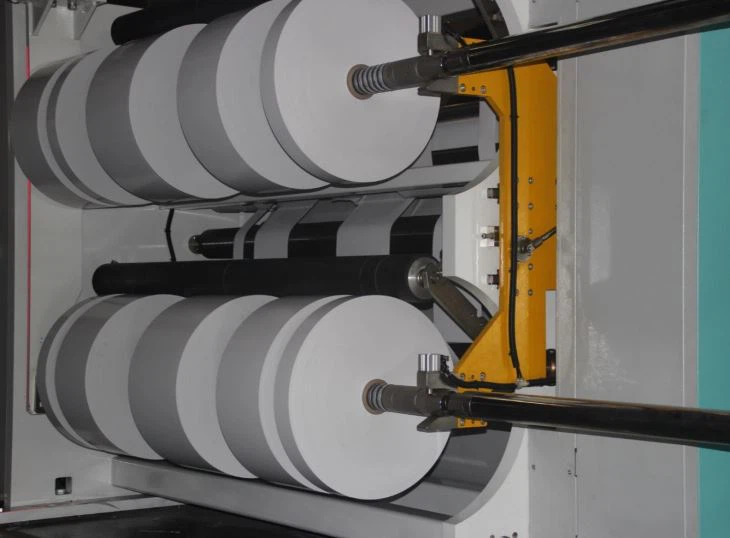
Measuring the Accuracy of Our Slitting and Rewinding Machines
To ensure the accuracy of our narrow web slitter rewinders, we conduct a series of rigorous tests during the manufacturing process. These tests include width measurement, edge quality inspection, and tension analysis.
We use high - precision measuring instruments to check the width of the slit strips. Our target width tolerance is typically within ±0.1mm, which is well within the industry standard. For edge quality, we visually inspect the strips under a microscope to ensure that there are no burrs, tears, or other defects.
Tension consistency is measured using specialized tension sensors. We aim to maintain a tension variation of less than ±5% throughout the rewound roll. By meeting these strict quality control standards, we can guarantee that our machines deliver high - accuracy slitting and rewinding results.
Applications and Benefits of High - Accuracy Slitting and Rewinding
1. Label Manufacturing
In the label manufacturing industry, accuracy is of utmost importance. Labels need to be cut to precise dimensions to fit correctly on products. Our high - accuracy slitter rewinders can produce labels with consistent width and clean edges, ensuring a professional appearance. You can learn more about our Labelstock Slitting Machine for label manufacturing applications.
2. Packaging
In the packaging industry, accurate slitting and rewinding are essential for producing high - quality packaging materials. Our machines can handle a wide range of packaging materials, including films, foils, and papers. By ensuring precise width and tension control, we can help our clients produce packaging materials that are both functional and aesthetically pleasing.
3. Printing
For the printing industry, accurate slitting and rewinding are necessary to ensure that the printed materials are cut and wound correctly. Our machines can work with various printing substrates, including paper, plastic, and fabric. The high - accuracy operation of our slitter rewinders helps to minimize waste and improve the overall efficiency of the printing process. You can explore our Label Inspection Rewinder for quality control in the printing process.
Our Commitment to Continuous Improvement
As a supplier, we are committed to continuous improvement. We regularly invest in research and development to enhance the accuracy and performance of our narrow web slitter rewinders. Our team of engineers is constantly exploring new technologies and materials to optimize the design and functionality of our machines.
We also value customer feedback. By listening to our clients' needs and experiences, we can identify areas for improvement and develop solutions that better meet their requirements. For example, if a customer requests a specific feature for more accurate slitting of a particular material, we will work to incorporate that feature into our product design.
Conclusion
The accuracy of slitting and rewinding in a narrow web slitter rewinder is influenced by multiple factors, including machine design, cutting blade technology, web guiding systems, and tension control. As a leading supplier, we have taken every measure to ensure that our machines deliver high - accuracy results.
Whether you are in the label manufacturing, packaging, or printing industry, our high - accuracy slitter rewinders can help you improve the quality of your products and increase your production efficiency. If you are interested in learning more about our Labelstock Paper Slitter Rewinder or other products, please feel free to contact us. We are ready to discuss your specific needs and provide you with the best solutions for your slitting and rewinding requirements.
References
- Smith, J. (2018). "Advanced Techniques in Narrow Web Processing". Journal of Manufacturing Technology.
- Johnson, M. (2019). "Tension Control in Slitting and Rewinding Operations". Packaging Industry Review.
- Brown, A. (2020). "Cutting Blade Technology for Precision Slitting". Manufacturing Engineering Journal.