

How to adjust the tension of a film slitter rewinder?
Nov 25, 2025
Hey there! I'm a supplier of Film Slitter Rewinders, and today I wanna talk about how to adjust the tension of a film slitter rewinder. It's a crucial aspect that can greatly impact the quality of your slitting and rewinding operations.
First off, let's understand why tension adjustment is so important. When you're working with a film slitter rewinder, the right tension ensures that the film is slit accurately and wound neatly onto the cores. If the tension is too high, the film might stretch or even break, leading to wasted material and production downtime. On the other hand, if the tension is too low, the film can become loose, causing wrinkles or uneven winding.
Now, let's get into the nitty - gritty of how to adjust the tension.
1. Initial Setup and Inspection
Before you start adjusting the tension, you need to do a quick inspection of the machine. Make sure all the components like the unwinding and rewinding shafts, guide rollers, and cutting blades are in good condition. Any worn - out parts can affect the tension control.
Check the film itself. Look for any signs of damage or irregularities that could cause problems during the slitting and rewinding process. If you notice any issues, it's best to address them before proceeding.
2. Understanding the Tension Control System
Most modern film slitter rewinders come with a sophisticated tension control system. There are generally two main types: manual and automatic.
Manual Tension Control
In a manual system, you'll have to adjust the tension by hand. This usually involves turning knobs or adjusting levers on the machine. The key here is to make small adjustments and test the results. Start with a rough estimate based on the type and thickness of the film you're working with. For example, thinner films usually require lower tension, while thicker ones need more.
Let's say you're using a Slitter Machine For Films. If it has a manual tension control, you might start by setting the tension at a medium level and then gradually increasing or decreasing it as you observe the film's behavior.
Automatic Tension Control
Automatic tension control systems are a lot more convenient. They use sensors to measure the tension of the film in real - time and adjust it automatically. These systems are great for maintaining a consistent tension throughout the slitting and rewinding process.
However, even with an automatic system, you still need to set some initial parameters. You'll need to input information about the film, such as its width, thickness, and material type. The machine will then use this data to calculate the appropriate tension.
3. Adjusting the Unwinding Tension
The unwinding tension is the tension of the film as it comes off the original roll. To adjust this, you can start by looking at the brake system on the unwinding shaft.
If you have a manual system, you can increase the pressure on the brake to increase the tension or decrease it to lower the tension. For an automatic system, the machine will adjust the brake pressure based on the sensors' readings.
Keep an eye on how the film is coming off the roll. It should be smooth and without any jerks. If the film is coming off too quickly, the tension is probably too low. If it's struggling to come off, the tension is too high.
4. Adjusting the Rewinding Tension
The rewinding tension is equally important. It determines how tightly the film is wound onto the new cores.
For manual systems, you can adjust the torque on the rewinding shaft. Increasing the torque will increase the tension, while decreasing it will lower the tension.
In an automatic system, the machine will adjust the torque based on the desired tension and the diameter of the rewinding roll. As the roll gets larger, the tension might need to be adjusted slightly to ensure a uniform winding.
5. Using Guide Rollers
Guide rollers play a big role in tension control. They help to keep the film in a straight path and distribute the tension evenly.
Make sure the guide rollers are clean and properly aligned. If they're dirty or misaligned, they can cause the film to deviate from its path and create uneven tension.

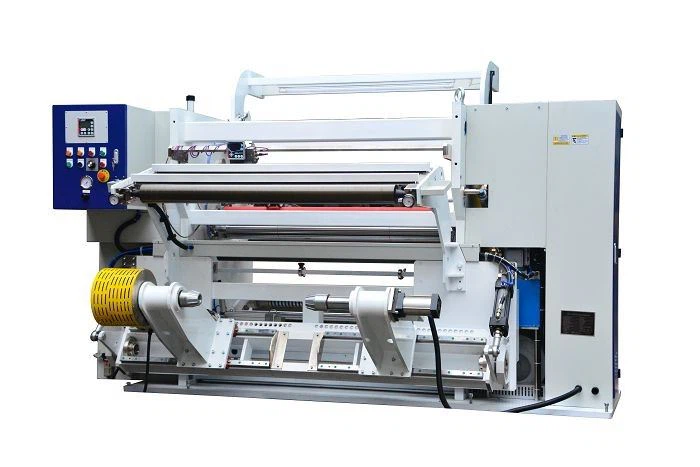
You can also adjust the position of the guide rollers to fine - tune the tension. Moving them closer or further apart can change the way the film wraps around them and affect the overall tension.
6. Testing and Fine - Tuning
Once you've made your initial tension adjustments, it's time to do some testing. Run a short length of film through the machine and observe the results.
Look at the slitting quality. The cuts should be clean and straight. Check the rewound rolls. They should be tightly wound without any wrinkles or loose edges.
If you're not satisfied with the results, make small adjustments to the tension and test again. It might take a few tries to get it just right.
7. Monitoring the Process
Even after you've set the tension correctly, it's important to monitor the process continuously. The tension can change over time due to factors like changes in the film's properties or machine wear.
Keep an eye on the tension gauges (if available) and the appearance of the film and the rewound rolls. If you notice any changes, make the necessary adjustments immediately.
8. Special Considerations for Different Film Types
Different types of films require different tension settings. For example, stretch films need a different tension compared to non - stretch films.
When working with stretch films, you need to be careful not to over - stretch them. The tension should be just enough to keep the film in place during slitting and rewinding but not so high that it causes permanent deformation.
Non - stretch films, on the other hand, can handle higher tensions. But you still need to make sure the tension is uniform to avoid cracking or splitting.
9. Troubleshooting Tension Issues
If you encounter problems with the tension, here are some common issues and solutions:
- Uneven Tension: This could be due to misaligned guide rollers, worn - out parts, or incorrect tension settings. Check the alignment of the guide rollers and replace any worn - out components. Make sure the tension settings are appropriate for the film.
- Film Breakage: If the film breaks, the tension is probably too high. Reduce the tension gradually and test again.
- Loose Winding: This indicates that the rewinding tension is too low. Increase the tension on the rewinding shaft and check the results.
In conclusion, adjusting the tension of a film slitter rewinder is a combination of understanding the machine's tension control system, making careful adjustments, and continuous monitoring. By following these steps, you can ensure high - quality slitting and rewinding operations.
If you're in the market for a top - notch film slitter rewinder, check out our Film Slitter Rewinder and HS2000 Turret Slitting Machine. These machines are designed with advanced tension control systems to make your job easier.
If you have any questions or are interested in purchasing a machine, don't hesitate to reach out. We're here to help you with all your film slitting and rewinding needs.
References
- Industry standards and best practices for film slitting and rewinding
- Manufacturer's manuals for film slitter rewinders
- Technical literature on tension control in industrial machinery