

Hey there! As a supplier of Narrow Web Slitter Rewinder, I often get asked about the different components of our machines and their functions. One part that seems to pique a lot of interest is the rewinding shaft. So, let's dig into what the rewinding shaft does in a narrow web slitter rewinder.
The Basics of a Narrow Web Slitter Rewinder
Before we jump into the rewinding shaft, let's quickly go over what a narrow web slitter rewinder is. It's a machine used in the converting industry to cut wide rolls of material, like paper, film, or foil, into narrower rolls. This process is crucial for various applications, such as label production, packaging, and printing. Our Narrow Web Slitter Rewinder is designed to handle different materials with precision and efficiency.
What is the Rewinding Shaft?
The rewinding shaft is a key component of the slitter rewinder. It's essentially a rod or tube around which the newly slit material is wound to form the finished narrow rolls. Think of it as the core around which the material builds up, much like how a spool holds thread. The rewinding shaft is usually made of high - strength materials like steel to withstand the tension and weight of the winding material.
Key Functions of the Rewinding Shaft
1. Winding the Slit Material
The most obvious function of the rewinding shaft is to wind the slit material. After the wide roll of material is cut into narrower strips by the slitting knives, these strips are guided onto the rewinding shaft. The shaft rotates at a controlled speed, pulling the material and winding it tightly and evenly. This ensures that the finished rolls have a consistent diameter and density, which is important for later processing and use.
For example, in label production, the labels need to be wound onto the rewinding shaft in a neat and orderly manner. If the winding is uneven, it can lead to issues like label misalignment or wrinkles, which are unacceptable in the final product. Our Labelstock Slitting Machine is equipped with high - quality rewinding shafts that ensure smooth and accurate winding of labelstock materials.
2. Tension Control
Another crucial function of the rewinding shaft is to control the tension of the material during the winding process. Tension control is essential because if the tension is too high, it can cause the material to stretch or break. On the other hand, if the tension is too low, the wound roll may be loose and unstable.
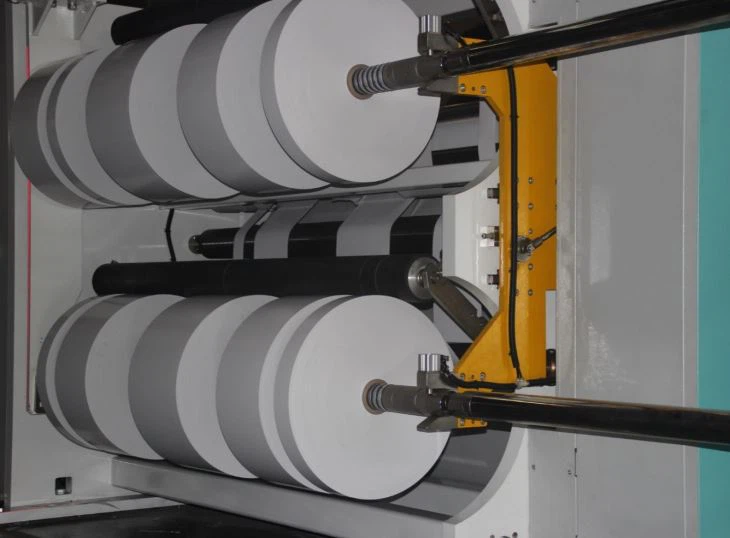
The rewinding shaft works in conjunction with other components, such as tension sensors and drives, to maintain the optimal tension. As the material is wound onto the shaft, the system continuously monitors the tension and adjusts the speed of the shaft accordingly. This ensures that the material is wound under the right amount of tension throughout the entire process.
3. Roll Formation
The rewinding shaft plays a vital role in forming the final shape and structure of the wound roll. It helps to create a tight and compact roll that can be easily handled, stored, and transported. The design of the rewinding shaft, including its diameter and surface finish, can affect the quality of the roll formation.
A well - designed rewinding shaft will have a smooth surface to prevent damage to the material during winding. It also needs to be straight and balanced to ensure that the roll is wound evenly. Our Narrow Web Slitter Rewinder uses advanced technology to ensure that the rewinding shaft meets these requirements, resulting in high - quality rolls.
4. Facilitating Roll Removal
Once the winding process is complete, the rewinding shaft makes it easy to remove the finished roll. Some rewinding shafts are designed with a mechanism that allows for quick and easy disassembly. This saves time and effort during the production process, especially when dealing with high - volume production.
For instance, in a busy label manufacturing facility, the ability to quickly remove the wound rolls from the rewinding shaft and replace them with new cores can significantly increase productivity. Our machines are designed with user - friendly features that make roll removal a breeze.

Impact on Overall Machine Performance
The performance of the rewinding shaft has a direct impact on the overall performance of the narrow web slitter rewinder. A well - functioning rewinding shaft ensures that the slitting and rewinding process runs smoothly, with minimal downtime and high - quality output.
If the rewinding shaft malfunctions or is not properly maintained, it can lead to a variety of problems. For example, uneven winding can cause the material to jam in the machine, resulting in production delays. Poor tension control can also lead to waste, as defective rolls may need to be discarded.
Importance in Different Applications
Label Production
In label production, the rewinding shaft is crucial for ensuring that the labels are wound neatly and securely. Labels need to be wound in a way that allows for easy dispensing during the labeling process. Our Label Inspection Rewinder uses a precision - engineered rewinding shaft to ensure that the labels are wound with the right tension and alignment, ready for use in various labeling applications.
Packaging
In the packaging industry, the rewinding shaft helps to create tight and stable rolls of packaging materials, such as plastic film or paper. These rolls are then used in packaging machines to wrap products. A good rewinding shaft ensures that the packaging material is wound evenly, which is important for smooth operation of the packaging machines and for the overall appearance of the packaged products.
Maintenance of the Rewinding Shaft
To keep the rewinding shaft functioning properly, regular maintenance is essential. This includes cleaning the shaft to remove any debris or residue that may accumulate during the winding process. Lubrication of the moving parts is also important to reduce friction and wear.
Inspecting the shaft for any signs of damage, such as cracks or dents, is another crucial part of maintenance. If any damage is detected, it should be repaired or replaced immediately to prevent further problems.
Conclusion
In conclusion, the rewinding shaft is a critical component of a narrow web slitter rewinder. It performs several important functions, including winding the slit material, controlling tension, forming the roll, and facilitating roll removal. Its performance has a significant impact on the overall quality and efficiency of the slitting and rewinding process.
If you're in the market for a high - quality Narrow Web Slitter Rewinder, don't hesitate to get in touch. We're here to help you find the right machine for your specific needs and ensure that you get the best performance out of it. Whether you're in the label production, packaging, or any other related industry, our machines are designed to meet your requirements. So, let's start a conversation and see how we can work together to improve your production process.
References
- Converting Equipment Handbook: A Guide to Flexible Packaging, Label, and Film Converting Machinery.
- Technical Papers on Slitting and Rewinding Technology from Industry Conferences.