

What are the performance indicators of a Cold Foil Slitter?
As a trusted supplier of Cold Foil Slitters, I understand the significance of evaluating the performance of these machines. Cold foil slitters play a crucial role in the packaging and printing industries, where precision and efficiency are paramount. In this blog post, I will delve into the key performance indicators (KPIs) that define the effectiveness of a Cold Foil Slitter.
1. Cutting Precision
One of the most critical performance indicators of a Cold Foil Slitter is cutting precision. The ability to make accurate and clean cuts is essential for ensuring the quality of the finished product. Precision cutting is measured by the accuracy of the cut width and the straightness of the cut edge.
A high - quality Cold Foil Slitter should be able to achieve a cut width tolerance within a very narrow range, typically ±0.1mm or less. This level of precision ensures that the foils are cut to the exact specifications required by the customer, minimizing waste and ensuring consistent product quality.
The straightness of the cut edge is also crucial. A jagged or uneven cut edge can lead to problems during subsequent processing steps, such as lamination or printing. A good Cold Foil Slitter uses advanced cutting technologies, such as circular knives or razor blades, to ensure a smooth and straight cut edge.
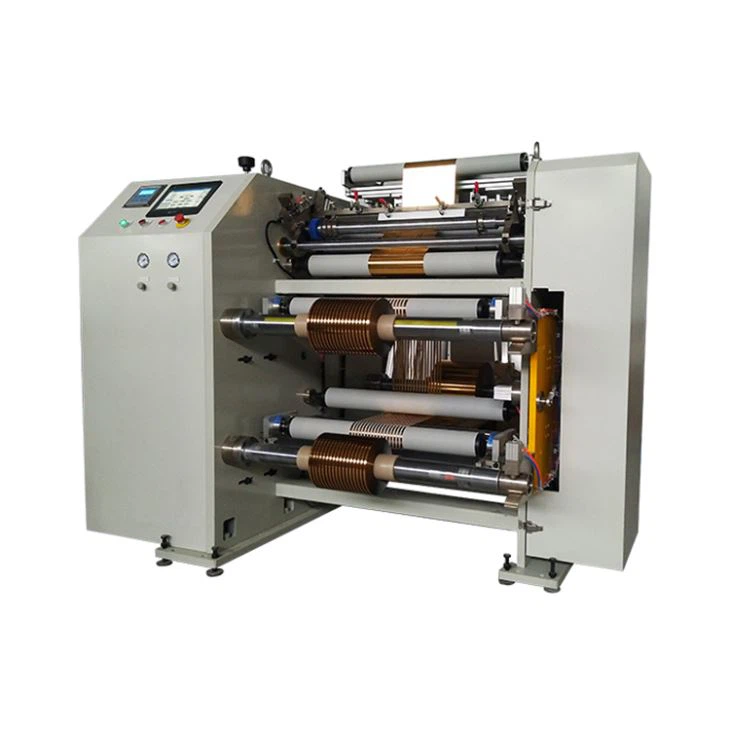

2. Slitting Speed
Slitting speed is another important performance indicator. In a production environment, time is money, and a faster slitting speed means higher productivity. However, it is important to note that slitting speed should not come at the expense of cutting precision.
The optimal slitting speed depends on several factors, including the type of cold foil, the thickness of the foil, and the width of the slits. A well - designed Cold Foil Slitter can achieve high slitting speeds while maintaining cutting precision. For example, some modern slitters can reach speeds of up to 600 meters per minute, significantly increasing the production output.
3. Tension Control
Proper tension control is essential for the successful slitting of cold foils. Tension control ensures that the foil is fed smoothly through the slitting machine and that the slits are made evenly. If the tension is too high, the foil may break or stretch, resulting in uneven cuts. On the other hand, if the tension is too low, the foil may wrinkle or bunch up, causing problems during slitting.
A high - performance Cold Foil Slitter is equipped with an advanced tension control system. This system can automatically adjust the tension based on the speed of the machine and the characteristics of the foil. By maintaining a consistent tension throughout the slitting process, the machine can produce high - quality slits with minimal waste.
4. Rewinding Quality
After the cold foil is slit, it needs to be rewound onto a new core. The quality of the rewinding process is an important performance indicator. A good rewinding system should ensure that the foil is wound tightly and evenly onto the core, without any wrinkles or air bubbles.
The rewinding tension also needs to be carefully controlled. If the rewinding tension is too high, the foil may be damaged, while if it is too low, the foil may unwind or become loose. A modern Cold Foil Slitter uses a sophisticated rewinding system that can adjust the tension based on the diameter of the rewound roll and the speed of the machine.
5. Machine Stability
Machine stability is crucial for maintaining consistent performance over a long period of time. A stable Cold Foil Slitter is less likely to experience vibrations or mechanical failures, which can affect the quality of the slitting process.
The frame of the machine should be made of high - quality materials, such as cast iron or steel, to provide a solid and stable base. The bearings and other moving parts should be of high quality and properly lubricated to reduce friction and wear. Regular maintenance and calibration are also important to ensure the long - term stability of the machine.
6. Waste Rate
The waste rate is an important performance indicator that reflects the efficiency of the slitting process. A low waste rate means that the machine is using the cold foil material effectively, reducing costs and environmental impact.
The waste rate is affected by several factors, including cutting precision, tension control, and the quality of the raw materials. A well - designed Cold Foil Slitter can minimize waste by making accurate cuts, ensuring proper tension control, and reducing the occurrence of defects.
7. Ease of Operation and Maintenance
A Cold Foil Slitter that is easy to operate and maintain can significantly improve productivity and reduce downtime. The machine should have a user - friendly interface that allows operators to easily set up and adjust the slitting parameters.
Maintenance requirements should be minimal, and the machine should be designed for easy access to key components for cleaning, lubrication, and replacement. For example, some machines are equipped with quick - change knife systems, which allow operators to replace the cutting knives quickly and easily.
8. Compatibility with Different Foils
Cold foils come in a variety of types and thicknesses, and a good Cold Foil Slitter should be able to handle different types of foils. This includes metallic foils, holographic foils, and other specialty foils.
The machine should be able to adjust its cutting parameters, such as blade pressure and tension control, based on the characteristics of the foil. This ensures that the slitting process is optimized for each type of foil, resulting in high - quality slits.
Conclusion
In conclusion, the performance of a Cold Foil Slitter is determined by a combination of factors, including cutting precision, slitting speed, tension control, rewinding quality, machine stability, waste rate, ease of operation and maintenance, and compatibility with different foils. As a supplier of Cold Foil Slitters, we are committed to providing our customers with machines that meet the highest standards of performance and reliability.
If you are in the market for a Cold Foil Slitter, we encourage you to explore our range of products. We also offer related products such as Hot Foil Slitter Rewinder, Narrow Hot Stamping Foil Slitter, and Hot Stamping Foil Slitting Machine. Our team of experts is ready to assist you in selecting the right machine for your specific needs. Please contact us for more information and to start a purchase negotiation.
References
- Packaging Machinery Handbook, Second Edition, edited by Wilmer A. Hernandez
- Industrial Foil Processing: Principles and Applications, by John R. Davis