

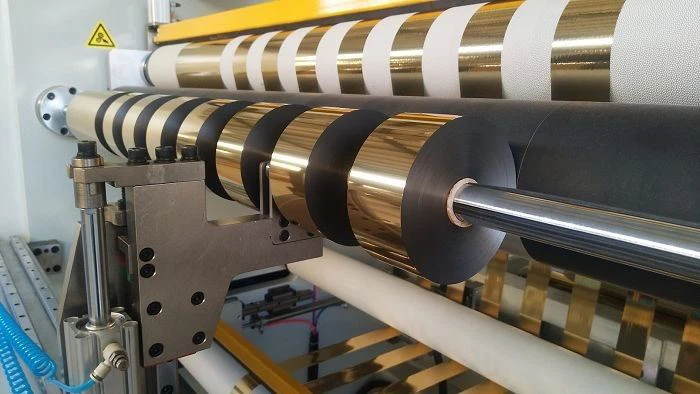
In the intricate world of hot stamping foil production, the slitting process is a crucial step that determines the quality and usability of the final product. A hot stamping foil slitter is a specialized machine designed to cut large rolls of hot stamping foil into narrower widths. One of the most critical components of this machine is the blade, which directly impacts the precision, efficiency, and overall quality of the slitting operation. As a leading supplier of [Hot Stamping Foil Slitter], I'd like to share some insights into the different types of blades used in these machines.
Rotary Blades
Rotary blades are perhaps the most commonly used type of blades in hot stamping foil slitters. These blades are circular in shape and rotate at high speeds to cut through the foil. The main advantage of rotary blades is their ability to provide a clean, continuous cut. They are suitable for a wide range of foil materials, including metallic foils, holographic foils, and paper-based foils.
The design of rotary blades allows for a smooth cutting action, minimizing the risk of tearing or fraying the foil. This is particularly important when working with delicate or high-quality foils. Additionally, rotary blades can be adjusted to achieve different cutting widths, making them versatile for various production requirements.
There are two main types of rotary blades: shear blades and razor blades. Shear blades work by creating a scissor-like cutting action, where two blades rotate against each other to slice through the foil. This type of blade is ideal for cutting thicker foils or materials with a higher tensile strength. On the other hand, razor blades are thinner and sharper, providing a more precise cut. They are commonly used for cutting thinner foils or for applications that require a high level of accuracy.
Circular Knives
Circular knives are another popular choice for hot stamping foil slitters. Similar to rotary blades, circular knives rotate to cut through the foil. However, circular knives are typically larger in diameter and have a thicker blade profile. This makes them more suitable for heavy-duty slitting applications.
Circular knives are often used in high-speed slitting machines, where they can handle large volumes of foil at a rapid pace. They are designed to withstand the high pressures and forces generated during the slitting process, ensuring long-lasting performance. Additionally, circular knives can be sharpened multiple times, extending their lifespan and reducing operating costs.
One of the key advantages of circular knives is their ability to provide a consistent cut across the entire width of the foil. This is achieved through precise blade alignment and the use of advanced cutting technologies. Circular knives are also available in a variety of materials, including high-speed steel, carbide, and diamond-coated blades, each offering different levels of hardness, wear resistance, and cutting performance.

Score Blades
Score blades are a specialized type of blade used for creating a perforated or scored line on the hot stamping foil. Instead of cutting through the foil completely, score blades make a shallow cut or indentation, allowing the foil to be easily torn or separated along the scored line. This is commonly used in applications such as packaging, labels, and ticket printing.
Score blades are typically made from high-quality steel or carbide and are designed to provide a clean and precise score. They can be adjusted to control the depth and width of the score, depending on the specific requirements of the application. Score blades are often used in combination with other types of blades, such as rotary blades or circular knives, to achieve the desired cutting and scoring results.
Choosing the Right Blade
Selecting the appropriate blade for a hot stamping foil slitter depends on several factors, including the type of foil material, the desired cutting width, the production speed, and the quality requirements. It is important to work with a reputable blade supplier who can provide expert advice and guidance based on your specific needs.
When choosing a blade, consider the following factors:
- Material Compatibility: Different blades are designed to work with specific types of foil materials. Make sure to choose a blade that is compatible with the material you are using to ensure optimal cutting performance.
- Cutting Width: The cutting width required for your application will determine the size and type of blade needed. Consider the minimum and maximum cutting widths you need to achieve and choose a blade that can accommodate these requirements.
- Production Speed: If you are running a high-speed production line, you will need a blade that can handle the rapid pace of the slitting process. Look for blades that are designed for high-speed applications and have a long lifespan to minimize downtime.
- Quality Requirements: The quality of the cut is crucial in hot stamping foil production. Choose a blade that can provide a clean, precise, and consistent cut to ensure the final product meets your quality standards.
Our Hot Stamping Foil Slitters
As a leading supplier of hot stamping foil slitters, we offer a wide range of machines equipped with the latest blade technologies. Our 800mm Small Slitter Rewinder is a compact and efficient solution for small-scale production. It is equipped with high-quality rotary blades that provide a precise and clean cut, making it ideal for a variety of foil materials.
For larger production volumes, our Hot Stamping Foil Slitting Machine is a powerful and reliable option. It features advanced circular knives that can handle high-speed slitting with ease, ensuring consistent performance and high productivity.
Our Hot Foil Slitter Rewinder is a versatile machine that combines slitting and rewinding functions in one unit. It is equipped with a variety of blade options, including score blades, to meet the diverse needs of our customers.
Contact Us for More Information
If you are in the market for a hot stamping foil slitter or have any questions about the different types of blades used in these machines, please do not hesitate to contact us. Our team of experts is available to provide you with detailed information, technical support, and customized solutions to meet your specific requirements. We are committed to helping you achieve the highest level of productivity and quality in your hot stamping foil production.
References
- Smith, J. (2020). Handbook of Foil Processing Technology. New York: Wiley.
- Johnson, R. (2019). Advanced Cutting Technologies for Hot Stamping Foil. Journal of Foil Manufacturing, 35(2), 45-52.
- Brown, A. (2018). The Impact of Blade Selection on Hot Stamping Foil Quality. Proceedings of the International Foil Conference, 12-15.